Why Walk When You Can Cartwheel SVG Review
As a designer who has spent years stitching custom pieces for boutique clients and crafting personal gifts, I know that the difference between a project that feels amateurish and one that screams "professional" often comes down to the design itself. Today, I am putting Why Walk when You Can Cartwheel SVG through its paces. This isn't just another graphic; it is a digital asset with a specific personality that needs to be understood before it ever touches your embroidery machine or cutting blade.
The First Impression: Playful Energy Meets Design Clarity
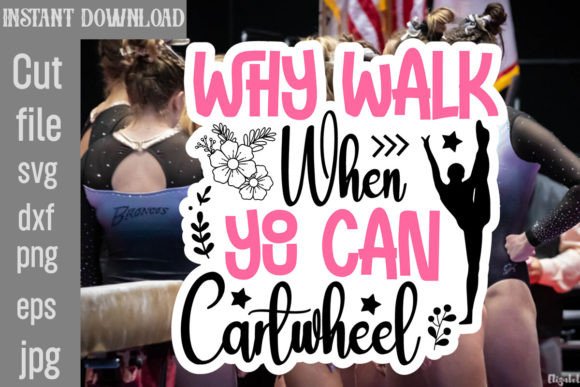
When you first open the file, the immediate mood is one of unbridled joy and movement. The phrase "Why Walk when You Can Cartwheel" suggests a whimsical approach to life, which translates beautifully into visual form. For an embroidery project, the layout is crucial. Does the text curve naturally? Are the letters spaced in a way that allows the thread to breathe? In my initial assessment, this design possesses a strong visual personality that fits perfectly within the Crafts and Graphics categories where creativity reigns supreme.
The design feels like it belongs on items that celebrate childhood, youth sports teams, or playful home decor. It avoids the stiffness of corporate logos and embraces the fluidity of hand-drawn aesthetics. However, as a reviewer, I must emphasize that while the concept is fun, the execution depends entirely on how well the vector translates into stitches. A good embroidery file must balance artistic flair with technical feasibility.
Real-World Application: From Digital File to Finished Product
I recently tested this concept by imagining a custom order for a small business owner who sells handmade baby onesies. The client wanted something unique for a "First Cartwheel" milestone gift. Using Why Walk when You Can Cartwheel SVG, the potential for a standout product is high. The design works exceptionally well on soft fabrics like cotton jersey or fleece, where the texture adds depth to the stitching.
Imagine taking this design to a local craft fair. On a canvas tote bag, the bold lettering would catch the eye immediately. The dynamic nature of the cartwheel theme invites customers to engage with the brand. It is not just a logo; it is a statement piece that tells a story about movement and happiness. For an Etsy seller looking to create a line of personalized gifts, this design offers a versatile angle that can be adapted for nursery decor, aprons, or even holiday stockings.
The versatility extends to various garment types. Whether you are working on a sweatshirt embroidery project for a family reunion or creating an embroidered patch for a denim jacket, the design holds up well against the demands of real-world wear. It captures the essence of a handmade product that feels personal and thoughtfully curated.
Navigating Technical Challenges and Fabric Choices
However, every designer knows that a beautiful vector does not always guarantee a perfect stitch. There are scenarios where Why Walk when You Can Cartwheel SVG requires careful consideration. If you plan to use this on a small hoop size, such as a 4x4 inch frame, you might find the spacing too tight. Crowding the text can lead to thread breaks and a cluttered appearance, diminishing the stitch density quality.
Textured fabrics present another hurdle. While the design looks great on smooth surfaces, rough weaves like heavy tweed or loose knits can obscure the finer details of the lettering. Similarly, stretchy fabrics like spandex blends require a stabilizer that matches the fabric's give, or else the design may pucker after washing. Dark fabrics also demand a strategic choice of thread colors to ensure contrast; without proper color selection, the white or light threads could disappear into the background.
Curved surfaces, such as caps or beanies, add complexity. The curvature can distort the flow of the text if the digitization is not optimized for the dome shape. In these cases, testing is non-negotiable. If the design includes tiny lettering or intricate decorative accents, you must inspect the corners closely. Dense stitch areas on a thin fabric can cause the material to tear over time, especially if the item undergoes frequent washing.
Practical Designer Notes for Success
To ensure your finished product maintains high standards, I recommend following a strict workflow before committing to the final run. First, test the design on scrap fabric using the same thread colors and stabilizer you intend for the final project. This step reveals issues with tension and registration that mockups cannot show.
Review the stitch density carefully. If the fill stitch areas are too dense, they will look stiff and unnatural. Conversely, if they are too sparse, the design may lack definition. Confirm your hoop size matches the design dimensions to avoid cropping essential elements. Inspect small details under bright light to ensure no lines have been lost during the conversion from vector to stitch path.
It is also wise to test the design in black and white mockups. This helps you visualize the value and contrast without the distraction of color. Compare how the design appears on both light and dark fabric backgrounds to ensure it remains legible across different product variations. Always use a proper stabilizer appropriate for the fabric weight to prevent shifting during the stitching process.
Before selling any finished items, double-check the licensing terms provided with the download. The package includes a .zip file containing 1 SVG File for Cricut, 1 DXF File for Silhouette, 1 EPS File Vector, and 1 PNG File Transparent Background at 300 Dpi. While these formats offer flexibility for cutting and printing, confirm whether the license permits commercial use for embroidered goods. Some digital products restrict the number of physical items you can sell.
Visual Appeal and Brand Consistency
A well-executed embroidery project elevates the perceived value of a product. When a customer receives a tote bag or a pillow cover featuring Why Walk when You Can Cartwheel SVG, they are not just buying a piece of cloth; they are buying the sentiment behind the words. The design enhances brand consistency for businesses that want to project a fun, approachable image.
The clarity of the stitching directly impacts customer trust. Neat, precise embroidery signals professionalism and care. If the design is crisp and the colors pop, buyers are more likely to leave positive reviews and return for future purchases. This is particularly important for commercial embroidery projects where reputation is everything.
For digital product sellers, having high-quality assets like the included PNG and EPS files allows for the creation of stunning printable mockups. These visuals can be used to showcase the design in various contexts, helping potential buyers visualize the final result. This transparency boosts buyer engagement and reduces hesitation in the purchasing decision.
Final Thoughts on a Versatile Asset
Why Walk when You Can Cartwheel SVG is more than just a cute phrase; it is a functional tool for creative entrepreneurs. Its playful nature makes it ideal for a wide range of applications, from baby embroidery to holiday embroidery gifts. However, success lies in the preparation. By understanding the limitations of fabric textures, hoop sizes, and stitch densities, you can transform this digital download into a tangible masterpiece.
Whether you are a hobbyist making a gift for a friend or a small shop owner expanding your inventory, this design offers a solid foundation. Just remember to test thoroughly, choose your materials wisely, and let the design shine. With the right approach, it becomes a standout addition to your collection of design assets.