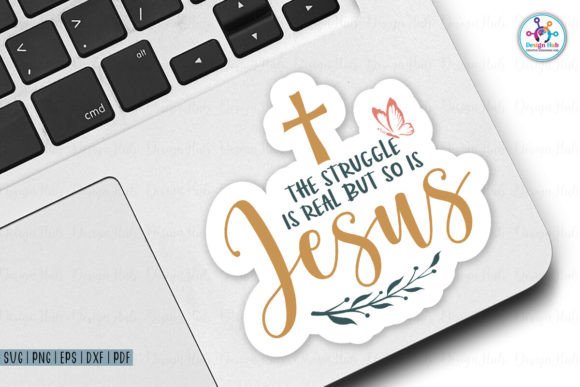
The Struggle Is Real But So Is Jesus
As a designer who spends half my life staring at digitized files and the other half watching them come to life under an embroidery hoop, I don’t just look at a design’s aesthetic. I look at its structural integrity, its emotional resonance, and its commercial viability. When I first pulled up The Struggle is Real but so is Jesus, I didn’t just see a sticker; I saw a potential bestseller for the faith-based apparel niche. It hits that sweet spot of relatable humor and spiritual grounding that performs exceptionally well in today’s handmade market.
This isn’t just another generic cross or dove motif. The layout carries a specific visual weight that demands attention. For those of us in the Crafts and Graphics spaces, recognizing a design that translates well from screen to stitch is crucial. This file set, offering high-quality SVG, PNG, EPS, PDF, and DXF formats, suggests versatility, but my review focuses on how it behaves when it actually becomes a machine embroidery design.
First Impressions: Mood and Visual Personality
The immediate mood of this piece is grounded yet approachable. The typography-driven nature of the phrase "The Struggle is Real but so is Jesus" allows for bold, legible lettering, which is a designer’s best friend. In embroidery, text is where designs often fail if not handled with care. Here, the balance between the colloquial "Struggle is Real" and the steadfast "Jesus" creates a narrative arc within the graphic itself. It feels like a conversation starter.
Visually, the design has a strong silhouette. Whether you are planning a sweatshirt embroidery project or a subtle chest logo on a polo, the shape holds up. It doesn’t rely on intricate, tiny details that might get lost in the fabric texture. Instead, it leans into blocky, confident forms. This makes it an excellent candidate for fill stitch applications, where the density of the thread can create a rich, textured surface that catches the light beautifully. It feels less like a fleeting trend and more like a staple piece for a Christian boutique’s inventory.
Real-World Application: From Digital File to Finished Product
Let’s talk about putting this into practice. Imagine you are prepping for a busy season, perhaps holiday gifts or back-to-school merchandise. You have a stack of heavyweight cotton canvas tote bag design blanks ready. Placing The Struggle is Real but so is Jesus on a tote is a natural fit. The ruggedness of the canvas complements the honest, no-nonsense vibe of the quote. As an Etsy seller or small shop product creator, you know that customers connect with authenticity. A tote bag featuring this message isn’t just carrying groceries; it’s carrying a declaration of faith and resilience.
I also see immense potential here for custom apparel. Think about oversized hoodies or crewneck sweatshirts. The design works beautifully as a large back print or a centered chest piece. Because the source files include vector formats like SVG and EPS, scaling the design to fit different garment sizes is seamless without losing edge definition. For commercial embroidery projects, this scalability is vital. You want your design assets to be flexible enough to adapt to various customer requests without needing to be redigitized every time.
Beyond apparel, consider home decor. A pillow cover or a kitchen towel embroidered with this phrase adds a touch of warmth to a home. It’s a personalized gift idea that resonates deeply with recipients who value both humor and their faith. When designing for the craft business, think about the unboxing experience. A neatly embroidered pillow with this message feels premium and thoughtful, elevating the perceived value of your handmade product.
Technical Considerations and Stitch Behavior
While the concept is strong, execution is everything. When working with embroidery files containing text and potentially decorative elements, you must pay close attention to stitch density. If the fill areas are too dense, the fabric may pucker, especially on lighter materials. Conversely, if they are too sparse, the backing material might show through, ruining the clean look of the finished product.
I recommend testing this design on scrap fabric before committing to your final pieces. Check how the thread colors interact with the base fabric. High contrast is key for readability. If you are using dark fabric, ensure your white or light-colored threads have enough coverage. Also, inspect the smaller details. Does the design include any fine lines or small accents? These should be evaluated carefully, as they can be prone to breaking or tangling during high-speed stitching.
The choice of stabilizer is equally important. For stretchy fabrics like jersey knits used in t-shirts, a cut-away stabilizer will provide the necessary support to prevent distortion. For stable fabrics like denim or canvas, a tear-away might suffice, but a wash-away could offer a cleaner finish on delicate items. Always confirm the hoop size required by the digitized version to ensure it fits your machine’s capabilities and your product dimensions.
Where to Use With Caution
Not every surface is created equal. While this design is versatile, there are scenarios where it requires careful handling:
- Small Hoop Sizes: If you attempt to shrink this design down too much for something like a baby onesie or a tiny patch, the text may become illegible. Embroidery has a minimum effective size, and cramming too many letters into a small area leads to muddy stitches.
- Textured Fabrics: Avoid placing detailed embroidery on heavily textured fabrics like bouclé or thick wools unless you are prepared for the needle to struggle. The uneven surface can cause misalignment and inconsistent tension.
- Curved Surfaces: Embroidering directly onto caps or curved hat panels can be tricky. Ensure the design is digitized specifically for curved surfaces to avoid distortion. Flat embroidery on a curve often results in stretched or skewed lettering.
- Thin or Stretchy Fabrics: Without proper stabilization, thin fabrics can pucker severely. Always test on similar material first.
Visual Appeal and Customer Trust
In the world of online selling, your printable mockup is your storefront. The Struggle is Real but so is Jesus lends itself well to high-quality mockups because of its clear, bold message. When customers browse your Etsy listings or social media pages, they need to read the text instantly. A blurry or poorly stitched representation can erode customer trust. By showcasing crisp, well-executed examples, you signal professionalism and quality.
This design also fosters brand consistency. If you are building a brand around faith-based encouragement, having a cohesive library of designs like this one helps establish recognition. Buyers come back to shops that feel curated and intentional. The combination of humor and faith creates an emotional connection, which drives engagement and repeat purchases. It’s not just a shirt; it’s a statement that aligns with the buyer’s identity.
Final Designer Notes
Before you start mass-producing, remember to check the licensing terms. Even though the file includes multiple formats like DXF and PDF, which are often used for cutting machines, ensure you have the rights to sell finished goods if that is your goal. Commercial licenses vary, and protecting your digital product sellers rights is essential.
Test the design in black and white mockups to ensure the layout balances well without relying on color alone. Compare light and dark fabric backgrounds to see which offers the best visual impact. Use a proper stabilizer suited to your fabric type. Inspect small details closely. Confirm whether the design works for both personal use and commercial projects.
Ultimately, The Struggle is Real but so is Jesus is a robust, emotionally resonant design that bridges the gap between humor and devotion. It performs well across a variety of mediums, from apparel decorators creating custom tees to creative entrepreneurs launching new product lines. With careful attention to stitch quality and fabric selection, this design can become a cornerstone of your embroidery project portfolio. It’s practical, meaningful, and visually striking—a winning combination for any craft business.