W.W.J.D. What Would Jesus SVG Cut File
As someone who has spent years reviewing embroidery files for both personal hobbies and commercial small business ventures, I know that the difference between a project that looks professional and one that feels amateurish often comes down to the source file itself. When I first encountered the W.W.J.D. What Would Jesus SVG Cut File, my immediate thought wasn't about the religious significance alone, but rather how this specific design would translate from a digital vector into a tangible stitched piece of art.
The market is saturated with faith-based graphics, yet finding a file that balances clear typography with versatile application potential can be surprisingly difficult. This review isn't just about downloading a file; it is about evaluating whether W.W.J.D. What Would Jesus SVG Cut File holds up under the scrutiny of real-world machine embroidery. I am looking at this through the lens of an experienced designer who needs to ensure that every stitch contributes to a high-quality finished product that customers will cherish.
First Impressions and Design Personality
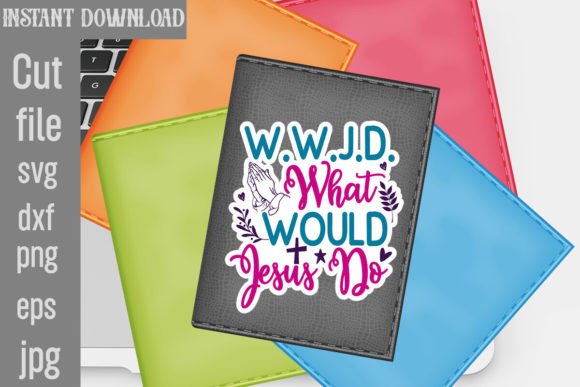
The visual personality of W.W.J.D. What Would Jesus SVG Cut File is straightforward and bold. In the world of embroidery, simplicity is often your best friend. The design relies on the strength of its lettering and the iconic nature of the acronym. It creates an immediate mood of reflection and devotion without needing excessive ornamentation. For a craft business owner or an Etsy seller, this clarity is vital because it ensures the message remains the focal point, even when stitched onto textured fabrics like denim or cotton twill.
The layout appears balanced, which suggests that the design will sit well on various garment placements, from the left chest of a sweatshirt to the center back of a tote bag. However, the success of any embroidery project hinges on how the lines are constructed. Does the file allow for clean satin stitches around the letters? Is there enough negative space to prevent the fabric from bunching? These are the questions I ask before ever loading a needle.
Real-World Application: A Custom Tote Bag Scenario
To truly understand the utility of W.W.J.D. What Would Jesus SVG Cut File, let's imagine a practical scenario. You are preparing for a local holiday market or launching a new line of personalized gifts. Your goal is to create a custom embroidered tote bag featuring this design. You have selected a sturdy canvas material, perhaps in a natural beige or a deep navy blue.
When you import the file into your digitizing software, you notice that the download includes a robust set of formats: an SVG for Cricut users, a DXF for Silhouette, a vector EPS file, and a high-resolution PNG. This variety is excellent for flexibility. If you are running a hybrid shop that does both print-on-demand and physical embroidery, having the EPS vector allows you to resize the design infinitely without losing quality for your printable mockups. Meanwhile, the PNG at 300 DPI provides a perfect reference image for your social media listings.
However, as you move to the actual stitching process, you realize that the text density matters. On a heavy-duty tote bag, the stitch density must be sufficient to hold the shape but not so dense that it puckers the canvas. If the original digitization of W.W.J.D. What Would Jesus SVG Cut File is too tight, the fabric might distort, making the message harder to read. Conversely, if the fill stitch coverage is too light, the texture of the fabric might show through, giving the final product a cheap appearance. Testing this on a scrap piece of your chosen canvas is non-negotiable.
Navigating Fabric Challenges and Limitations
Not every surface is created equal, and W.W.J.D. What Would Jesus SVG Cut File has specific constraints depending on where you apply it. While it shines on structured items like aprons, pillow covers, and caps, it requires careful consideration on stretchy fabrics. If you attempt to embroider this design directly onto a thin, stretchy t-shirt without proper stabilization, the letters may warp during the wash cycle.
Small hoop sizes present another challenge. If you intend to use this design for baby embroidery on onesies or hats, you must verify the dimensions of the file. Acronyms like "W.W.J.D." can sometimes look cramped if scaled down too aggressively. Tiny lettering risks becoming illegible once stitched, especially if the thread color contrast isn't sharp. For these smaller projects, you might need to adjust the hoop size or choose a larger font weight if the software allows, ensuring the details remain crisp.
Dark fabrics also demand attention. To make W.W.J.D. What Would Jesus SVG Cut File pop against a black background, you will likely need a high-density underlay or a contrasting thread color. Without this, the design could get lost in the darkness of the material. Similarly, on textured fabrics like fleece or thick wool, the definition of the letters might soften, requiring a slightly simpler version of the design to maintain clarity.
Impact on Brand Consistency and Customer Trust
For those of us selling handmade products, the visual appeal of the finished item directly correlates to customer trust. A sloppy stitch job can ruin the perceived value of a gift, regardless of how meaningful the message is. Using a well-constructed file like W.W.J.D. What Would Jesus SVG Cut File signals professionalism. It tells the buyer that you care about the details, from the initial digital file to the final packaging.
This design fits naturally into categories like holiday gifts, wedding favors, and boutique branding. When a customer receives a personalized gift featuring a clear, well-executed machine embroidery design, they are more likely to recommend your craft business to others. The recognition factor of the "What Would Jesus" phrase is high, making it a recognizable symbol of faith that resonates with a specific demographic. Ensuring the design is clean and precise enhances this connection.
However, if you plan to sell finished items featuring this design, you must double-check the licensing terms. Many digital products come with restrictions on commercial use. Before listing your small shop product on Etsy or at a craft fair, confirm that you have the right to sell the physical goods made from this file. Ignoring this step can lead to legal issues that damage your reputation.
Practical Designer Notes for Success
Before you commit to a full production run, here is a checklist derived from experience to ensure W.W.J.D. What Would Jesus SVG Cut File performs perfectly:
- Test on Scrap Fabric: Always run a test stitch on a scrap piece of your intended material to check for puckering, thread breaks, or alignment issues.
- Review Thread Colors: Compare different thread colors against your fabric. High contrast usually yields the best results for text-heavy designs.
- Check Stitch Density: Inspect the fill areas. If the design looks too heavy, consider reducing the density in your digitizing software to improve the drape of the fabric.
- Confirm Hoop Size: Ensure the design fits within your machine's maximum hoop dimensions, especially if you are working on curved surfaces like caps.
- Inspect Small Details: Zoom in on the corners of the letters. Sharp corners are essential for a clean look, while rounded corners might look muddy on small scales.
- Use Proper Stabilizer: Depending on the fabric weight, select the appropriate stabilizer (cut-away, tear-away, or water-soluble) to support the satin stitch and running stitch elements.
- Mockup Visually: Create black and white mockups to see how the design translates without color distractions.
In conclusion, W.W.J.D. What Would Jesus SVG Cut File offers a solid foundation for a wide range of embroidery projects. Its versatility makes it suitable for everything from casual home decor to serious commercial merchandise. By approaching the digitization process with care and understanding the limitations of different fabrics, you can transform this digital asset into a cherished handmade product that stands out in a crowded marketplace.
Whether you are a seasoned embroidery designer or a hobbyist looking to expand your skills, taking the time to evaluate the file's structure and testing it thoroughly will pay off in the quality of your final output. This design has the potential to be a staple in your collection of design assets, provided you respect the technical requirements of machine embroidery.